
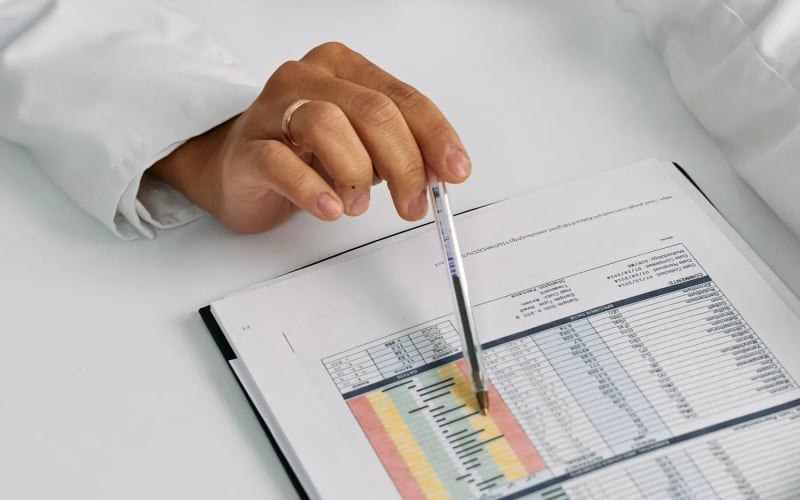
Quick answer: A lab report compares each of your results with a "reference range" printed beside it. A result slightly outside the range is common and is not a diagnosis by itself — ranges differ between labs, and doctors read the report together with your symptoms and history. The tests most often ordered in Pakistan are CBC (blood counts), blood sugar and HbA1c (diabetes), lipid profile (cholesterol), LFT (liver) and creatinine (kidney). This guide explains each in plain words so you can have a better conversation with your doctor.
Important: this article explains what tests measure. It does not diagnose any condition. Always discuss your report with a qualified doctor.
CBC — Complete Blood Count
| Part | What it shows |
|---|---|
| Haemoglobin (Hb) | The oxygen-carrying part of your blood. Low Hb is called anaemia and is very common; it can make you feel weak and tired. |
| WBC (white cells) | Your infection-fighting cells. High WBC often points to an infection or inflammation somewhere in the body. |
| Platelets | The cells that help blood clot. Low platelets get special attention during dengue season. |
| RBC, HCT, MCV and related values | The size and number of your red cells — they help the doctor judge the type of anaemia. |
Blood sugar and HbA1c — the diabetes tests
- Fasting blood sugar — measured after 8–12 hours without food. This is why labs ask you to come on an empty stomach.
- Random blood sugar — measured at any time of day, whatever you ate.
- HbA1c — your average blood sugar over roughly the last three months. It does not need fasting, and doctors rely on it to judge long-term sugar control.
Lipid profile — the cholesterol test
- Total cholesterol — the overall figure.
- LDL — often called "bad" cholesterol; doctors usually want this lower.
- HDL — "good" cholesterol; higher is generally better.
- Triglycerides — another blood fat, raised by sugar, weight and some foods; the test is usually done fasting.
LFT — liver function tests
ALT and AST are enzymes that rise when the liver is irritated or inflamed; bilirubin is the pigment behind jaundice (peeli rangat); ALP and proteins complete the picture. One raised value after illness, medicines or a heavy week does not automatically mean serious liver disease — doctors usually repeat and correlate.
Kidney tests — creatinine and urea
Creatinine is a waste product the kidneys filter out; when kidneys slow down, creatinine rises. Urea moves with diet and hydration as well. Doctors often calculate eGFR from creatinine, age and sex for a clearer kidney picture.
Other common tests on Pakistani reports
- Urine DR — a routine urine examination for infection, sugar, protein and blood cells.
- Vitamin D — very commonly low in Pakistan; measured as 25-OH vitamin D.
- TSH — the first test for thyroid problems.
- ESR / CRP — general inflammation markers; they rise in many conditions and never diagnose one alone.
How to read the reference range correctly
- Ranges differ by lab. Each lab prints its own range based on its machines and methods — always read your result against the range on the same page.
- Age and sex matter. Haemoglobin and several other ranges are different for men, women and children.
- Small deviations are common. A value just outside the line, with no symptoms, usually means "repeat and discuss", not panic.
- Compare like with like. For follow-up tests, use the same lab when you can, so trends are real and not machine differences.
- Trends beat single values. Three reports over time tell a doctor far more than one.
When should you see a doctor quickly?
Do not wait for a routine appointment if a report comes with symptoms such as very high fever that is not settling, unusual bleeding or bruising, severe weakness or breathlessness, yellow eyes with dark urine, or a sugar result far from your usual range with vomiting or drowsiness. In these cases, take the report to a doctor or hospital the same day.
Getting the test done right
Choosing a reliable lab matters as much as reading the report — see our guide on how to choose a diagnostic lab in Pakistan, and browse verified labs in Karachi, Lahore and other cities in the PkBizGuide laboratory directory. Keep your old reports in one file; they are your health history.
Frequently asked questions
My result is slightly outside the range. Should I worry?
Usually not on its own. Small deviations are common in healthy people. Note it, and discuss it at your next visit — or sooner if you have symptoms.
Why does my report's range differ from my brother's report from another lab?
Different labs use different machines and methods, so their reference ranges differ. That is normal and expected.
Can I diagnose myself from this guide or the internet?
No. Tests support a doctor's judgement; they never replace it. The same value can mean different things in different people.
How long should I fast before tests?
Fasting sugar and lipid profile usually need 8–12 hours (water is fine). HbA1c and CBC need no fasting. Your lab confirms when you book.
Should I repeat a surprising result?
Doctors often repeat an unexpected result before acting on it — a sample problem or a temporary illness can distort a single reading.
What should I take to the doctor?
All recent reports (not just the latest), your medicine list, and a note of your symptoms and when they started.
General information checked on 1 November 2026. This article is educational and is not medical advice.
Explore more businesses in Laboratory
Browse more verified listings in this category to compare services and contact top providers.
Explore CategoryRelated Blogs
Continue reading related guides to deepen topic relevance.
How to Choose a Diagnostic Lab in Pakistan: Tests, Prices and Home Sampling Explained
Same blood test, very different prices and quality. A practical guide to choosing a diagnostic lab in Pakistan — what affects test prices, how home sampling works, and the red flags to avoid.
Top IT & Services Businesses in Multan (2026 Guide)
Discover Multan's growing IT scene from a women-only ride app to digital marketing agencies and tax tools. See who's leading tech and services in the city.
Top Education Institutes & Schools in Multan (2026 Guide)
From Bahauddin Zakariya University to top schools and IT institutes, explore Multan's leading education providers shaping students' academic and career paths.